Between Shock and Opportunity: Hormuz and Deepening North Africa–Europe Relations
Megatrends spotlight 78, 03.08.2026With the world’s attention fixed on the Strait of Hormuz, developments in North Africa have made fewer headlines in Europe. The crises in the Middle East are likely to deepen the geostrategic interdependence of North Africa and Europe, creating opportunities for both regions.
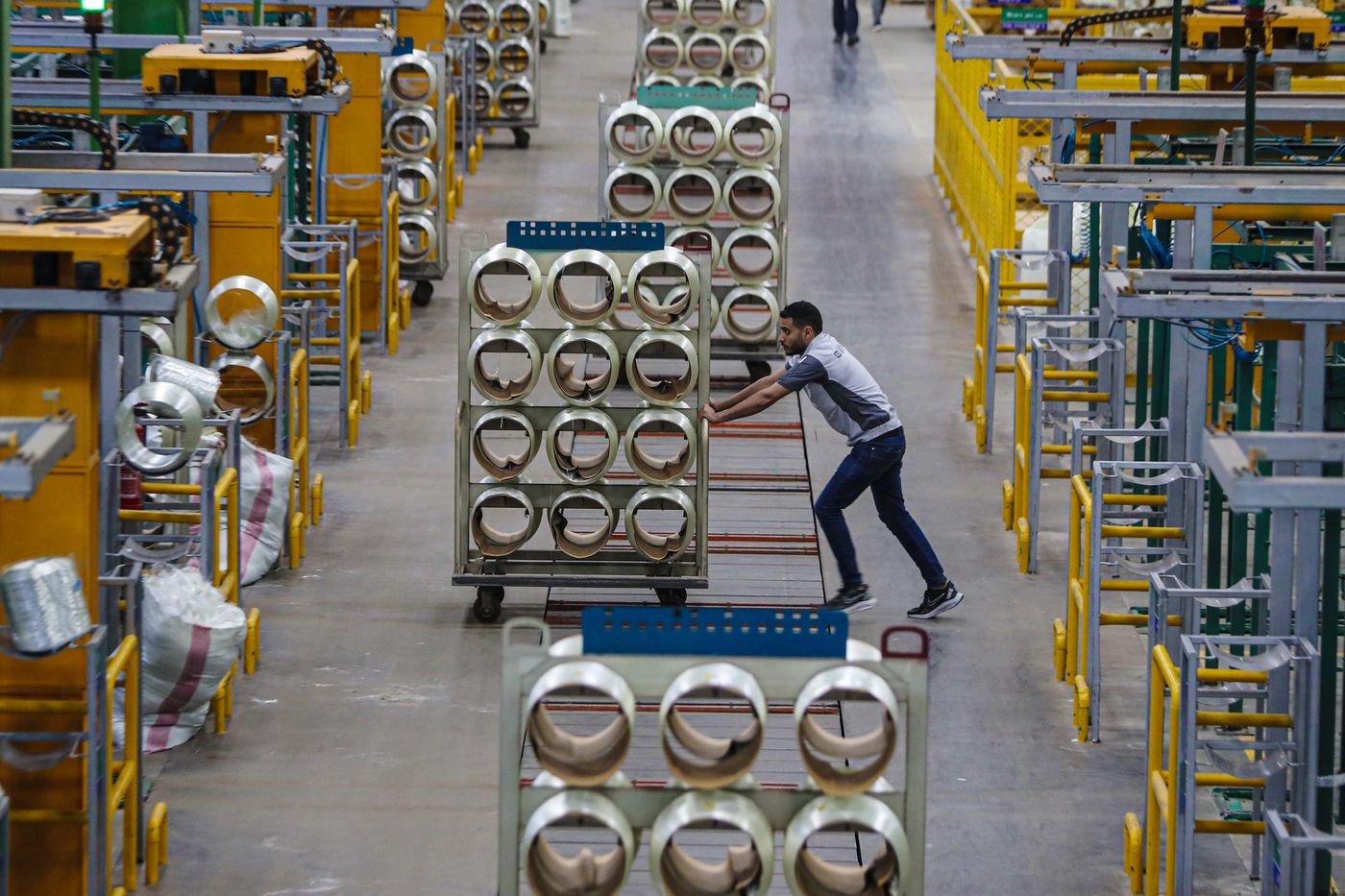
A man works at the Chinese fiberglass company Jushi in the Suez Canal Economic Zone, established in 2015 to promote economic growth and attract foreign investment and currently undergoing a new phase of logistical expansion, in Ain Sokhna, Suez Governorate, Egypt, November 6, 2024.
© picture alliance / Xinhua News Agency | Ahmed Gomaa
A “memorandum of understanding” may or may not have paused the US-Israeli war on Iran, but experts doubt that it will usher in a lasting peace. Iran’s blockade of the Strait of Hormuz disrupted global energy supplies, trade and logistics routes, and commercial relations. The prospect of renewed closures is likely to deepen geostrategic interdependence of North Africa and Europe. This new reality is crucial for European energy security and a potential turning point for North African countries. Moving beyond a transactional, security-oriented relationship would enable North Africa and the European Union (EU) to strengthen their mutual resilience to future shocks and create development opportunities for societies on both shores of the Mediterranean.
What the Hormuz Closure Means for North Africa
North Africa is crucial to Europe in many respects: as an energy supplier, a geographically proximate trading partner, a source of skilled labour, and a tourist destination. The impacts of the US–Israeli war on Iran have deepened longstanding political and economic challenges across the five North African countries. Rising prices, a lack of prospects for young people, and restricted channels for political expression – coupled with structural shortcomings in public services, including health and education – risk exacerbating political instability across North Africa, with knock-on effects for Europe. The Hormuz crisis could accelerate these trends.
For energy importers Egypt, Tunisia, and Morocco, the Hormuz crisis has contributed to higher prices for petrol, electricity, and food.
Egypt is under intense pressure in this regard. Consumer price inflation stood at 13.4 per cent year-on-year in February 2026, while food prices rose by 4.6 per cent. Revenues from the Suez Canal, already under pressure because of Houthi attacks, have benefited somewhat from diverted oil tankers but remain at less than half of 2023 levels. Remittances from the approximately five million Egyptian migrant workers in the Gulf States are vulnerable to continued uncertainty. Young Egyptians face rising living costs and worsening job prospects, increasing the risk of protests and the inevitable authoritarian crackdown in response.
Tunisia faces a fragile fiscal position, with public debt standing at just under 80 per cent of GDP. The cost of food in Tunisia increased 7.1 per cent in June of 2026 over the same month in 2025, and is predicted to continue trending upwards. The Tunisian economy, which was expected to grow by 2.1 per cent in 2026, is now projected to shrink by 0.8 percentage points. This could pressure the government to further depreciate the dinar and cut subsidies for fuel and staple foods, thereby increasing the risk of social instability.
In the wake of the Gen Z protests in 2025, Morocco increased social spending, maintained subsidies on gas, sugar, transport, flour, and electricity, and raised the minimum wage. The Hormuz crisis has made this commitment considerably more expensive: compensation spending is projected to reach around 1.2 per cent of GDP this year, well above the previous year. Headline inflation has therefore stayed low, but price stability is being purchased rather than achieved. Morocco remains vulnerable to energy-price shocks: Although renewable energy accounts for 17 per cent of total production, the country still relies on imported fossil fuel to meet 90 per cent of domestic energy demand.
By contrast, the energy exporters Algeria and Libya are benefiting from higher oil and gas prices and are less exposed to the fiscal burden of expensive energy imports. However, this hydrocarbon windfall does not address the deeper structural risks to stability in either country.
Since Russia’s invasion of Ukraine, Algeria has become an important contributor to Europe’s gas security and currently provides 18 per cent of the EU’s gas imports. Nevertheless, Algeria currently uses more than half of its gas production domestically, and its infrastructure is facing limits. New investments, together with the awarding of licences to companies that include ExxonMobil and Chevron, could lay the foundations for future production growth. However, the controversial extraction of shale gas carries significant risks to the environment and the local population, including the potential for protests.
In Libya, oil revenues continue to finance the two main rival political factions: the Government of National Unity in the west and the Libyan National Army in the east. Despite additional revenues, Libya remains exposed to negative consequences, including higher fertilizer and food costs, and reduced remittances from migrant workers in the Gulf.
Trade and Energy: Is North Africa Becoming a New Geostrategic Hub?
The Hormuz crisis is likely to accelerate North Africa’s emergence as a geostrategic hub between Europe, Africa, and the Middle East. This could have far-reaching socio-economic and even political consequences that may help reduce the risks outlined above.
For Europe, the blockade of the Strait of Hormuz has entrenched North Africa’s importance as an energy provider. In 2025, Algeria was the EU’s second-largest supplier of natural gas, accounting for 17.4 per cent of total imports. Algerian gas pipelines (the “Transmed” to Italy and the “Medgaz” to Spain) have become cornerstones of Europe’s energy security. The Hormuz crisis has increased the urgency for further investment in the modernization of Algeria’s energy infrastructure.
The crisis has also led to the prioritization of expanding renewable energy infrastructure. Although it is too early to assess concrete changes in production, existing initiatives are likely to be implemented faster, such as the EU’s “AccelerateEU” – a package of measures intended to address rising energy costs and further reduce reliance on oil and gas. Investment promises and partnerships for hydrogen production for energy use and fertilizer production may reinvigorate the sector. This could help secure long-term cooperation on renewable energy across the Mediterranean region.
The logistical problems caused by the Hormuz crisis could also improve North Africa’s position as a trade hub. Morocco, for instance, has invested heavily in this, including through the leading port in Africa, Tanger Med; an automotive manufacturing centre that includes building battery factories, partly in partnership with Chinese firms; and as a producer of green energy. China and other countries are taking advantage of access to the markets in more than 50 countries through its free trade agreements with Morocco. The country’s phosphate reserves and associated fertilizer production as well as its ambitious hydrogen-production programme could further support regional production and trade.
Meanwhile, Egypt has seen strong growth in the Suez Canal Economic Zone, which is a free zone offering tax incentives and an export-oriented focus to attract businesses. A new phase of logistical expansion is taking shape, including new port capacity and with significant Chinese involvement. However, the threat of Houthi attacks on Red Sea shipping means that the development of logistics capacity around the Suez Canal remains dependent on the evolving security situation in the Gulf.
North Africa–Europe Relations: Between Shock and Opportunity
The Hormuz crisis has revealed vulnerabilities, accelerated existing trends, and underscored the strategic value of geographic proximity. The shock may have created an opportunity to develop deeper partnerships between Europe and North African countries, moving beyond the largely transactional model framed by the EU’s 2025 “Pact for the Mediterranean”. North Africa’s increasing importance as a strategic hub has clear implications for Europe. The region can no longer be viewed primarily as a “buffer zone” for migration control – and the latest attempt of mass migrant crossing in the Spanish enclave Ceuta illustrates once more the limits of this approach. It must be approached more holistically as a partner for trade and logistics, mutually beneficial economic development, the circular migration of skilled workers, climate change adaptation and mitigation, and dialogue and exchange on socio-political issues.
North Africa’s increased importance to trade routes during and after the Hormuz crisis may also support the faster implementation of related areas of cooperation. Wherever there is an increase of industrial production and assembly in the automotive and aerospace sectors and energy production, interest in mutual technology transfer as well as joint vocational training and research is also likely to grow.
North African countries have a renewed opportunity to diversify their industrial base, including by reducing reliance on the rentier economic model of countries exporting fossil fuels. Supported by European investment, this transition can foster more resilient, multifaceted economies that are less vulnerable to geopolitical shocks. Greater investment in public services, measures to address social inequality, climate change adaptation, and stronger political participation and accountability are key elements in this regard. Improving regulatory quality, transparency, and accountability are prerequisites for growth that benefit society as a whole, not just businesses or elites.
If the Hormuz crisis accelerates low-carbon production as well as trade in goods and energy between North Africa and Europe, it could be an opportunity to strengthen the EU’s positive contribution to climate change mitigation and adaptation. Trade and investment projects that account for climate and resource risks can help mitigate them and support sustainable social and economic development. Social and environmental standards in Deep and Comprehensive Free Trade Agreements must be negotiated, and corporate due diligence obligations regarding sustainability (under the EU Supply Chain Due Diligence Directive and the Carbon Border Adjustment Mechanism) should be implemented. These measures are designed to support decarbonization in third countries and help shape deeper regional integration in the context of the Hormuz crisis.
For the partnerships between North Africa and Europe to develop successfully and sustainably, they must continue to evolve. They need to move beyond the transactional, security-oriented framework that has prioritised European border and energy security, while reinforcing the resilience of authoritarian regimes. A well-developed, multidimensional alliance with North African countries would promote sustainable economic and social development as well as support democratic change as a means of embedding socio-economic benefits in North African societies. This could create a new model of regional cooperation that is just as resilient as the infrastructure it builds. The Hormuz crisis provides an opportunity to reshape and reinforce such partnerships.
Dr Annabelle Houdret is a senior researcher in the Environmental Governance department at the German Institute of Development and Sustainability (IDOS), and Dr Mark Furness is a senior researcher in the Inter- and Transnational Cooperation department at IDOS.
