The Calm before the Storm? Egypt’s Youth under President al-Sisi
Megatrends spotlight 68, 23.03.2026
In Egypt, youth-led protests have been avoided as a result of systematic political control, digital repression, and emigration. However, amid deepening socio-economic despair and demographic pressures, the possibility of future protests is increasing, according to Stephan Roll and Josef Schreck.
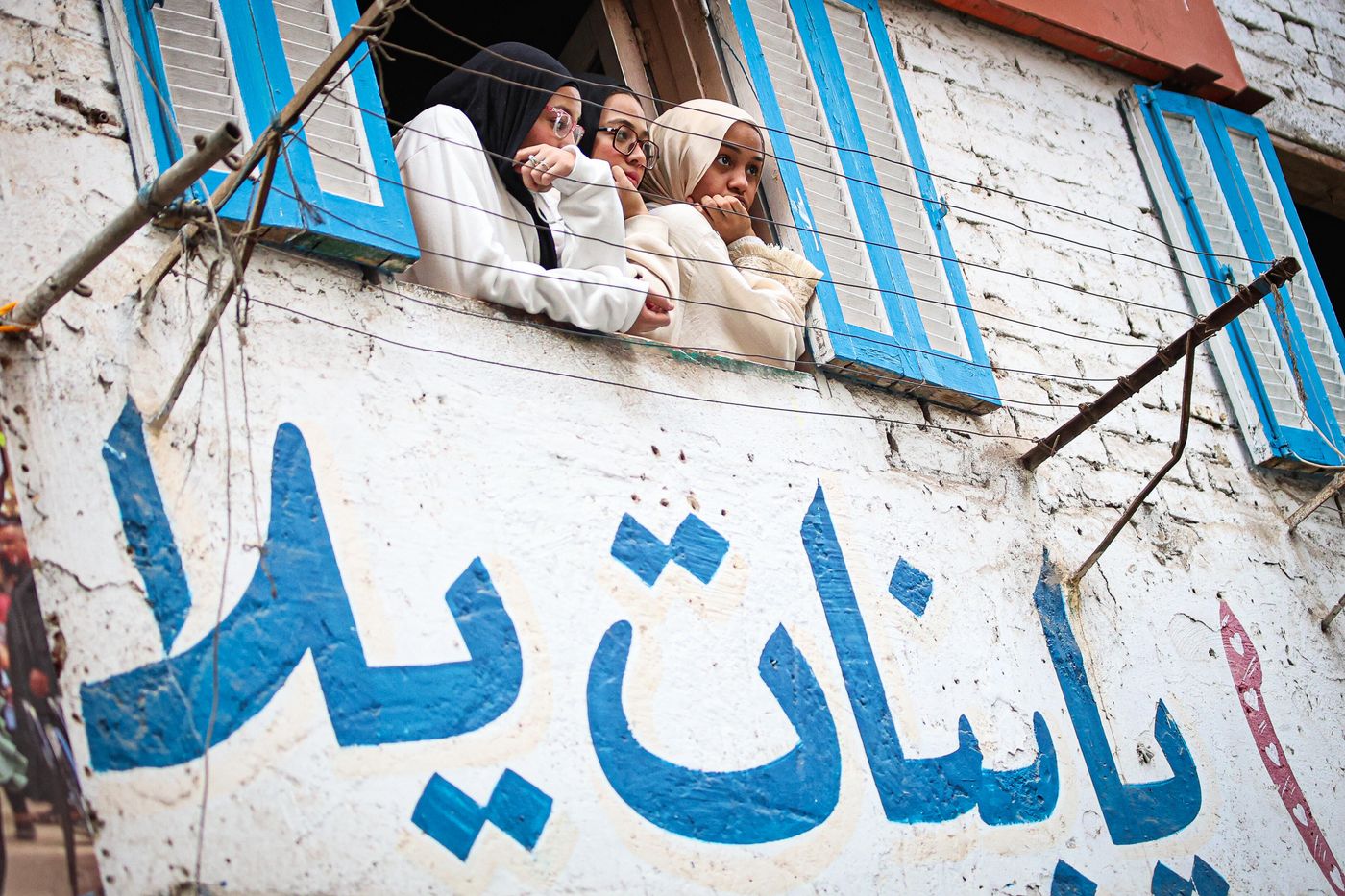
Gen Z, that is, young people now aged between 14 and 29, have sparked social protests in various countries such as Madagascar and Morocco in recent months – though not (yet) in Egypt.
© picture alliance / NurPhoto | Ahmed Mosaad
The Gen Z protests of 2025, which extended from Nepal to Madagascar, Morocco, and Peru, revived memories of the mass demonstrations in Cairo’s Tahrir Square in early 2011. At the outset of the so-called Arab Spring, it was above all young Egyptians who drove the protests against the regime of longtime ruler Hosni Mubarak.
Some 15 years later, however, Egypt’s streets and squares remain remarkably quiet. Even on 25 January 2026 – the anniversary of the Egyptian uprising – there were no visible signs of protest. Yet living conditions, particularly for Egyptian youth, have noticeably deteriorated since the 2010s.
Lack of Socio-Economic Prospects
In recent years, the Egyptian authorities have increasingly withheld up-to-date figures on poverty trends. However, estimates from sources close to the national statistics authority suggest that more than 35 per cent of the population was living below the national poverty line in 2023, compared with around 25 per cent in 2010/11. However, given the steep price increases – including for staple foods – and extensive cuts to subsidies, the true scale of poverty is likely to be significantly higher. As early as 2019, the World Bank estimated that up to 60 per cent of the population was either living in poverty or at least acutely at risk of poverty. The situation is particularly dire for young people, but this is often not adequately reflected in the official statistics, which have limited credibility.
One striking example is the education sector, which is of particular importance for young people. Rising formal literacy rates mask deep structural deficits. Outdated curricula, overcrowded classrooms, and inadequately equipped school buildings lead to more than half of pupils failing to meet international minimum standards. This is compounded by chronic underfunding: Government spending on education remains well below both constitutional requirements and international standards, and policy is often focused on quantity rather than quality. The result is an education system that inadequately prepares many young people for the labour market and reproduces, rather than mitigates, social inequalities.
Government statistics also fail to capture the true severity of the situation on the labour market. Although official youth unemployment – which counts only those actively seeking work – fell from around 30 per cent in 2011 to approximately 17 per cent in 2024, this decline was not matched by a comparable rise in employment. On the contrary, the labour-force participation rate of young people aged 15 to 24 reached only around 24 per cent in 2024. In other words, given the poor economic conditions, the vast majority of young Egyptians see no realistic prospects in the labour market, withdraw from it, and consequently do not appear in the unemployment statistics.
At the same time, many members of Gen Z are likely aware that the socio-economic crisis is inextricably linked to the country’s political landscape. While external crises – such as the current war in Iran and its impact on energy prices, trade, and tourism – are worsening the economic situation, President Abdel Fattah al-Sisi’s economic policies have done little to strengthen the country’s resilience and have primarily served to safeguard the existing balance of power, especially in the interests of the influential military and security apparatus. The misallocation of state resources to questionable mega-projects and excessive arms procurement goes hand in hand with endemic corruption and self-enrichment.
Authoritarian Youth Policy
The absence of mass protests despite these ongoing crises is largely due to the regime under President al-Sisi learning from the events of 2011. Today, the political leadership “invests” far more strategic attention in Egyptian youth than it did before 2011. However, this is not about eliminating socio-economic hardship, but rather about maximizing control through the institutional integration and political co-optation of young Egyptians into regime-aligned structures.
To this end, the regime relies on cadre development. The launching of the Presidential Leadership Programme (PLP) in 2015 and its institutional consolidation under the National Training Academy (NTA) in 2017 has created a training programme for loyal cadres in the civil service, politics, and the media. The PLP traces its origins to a precursor programme at the Nasser Military Academy and retains close institutional and personal links to the military. Aimed at university graduates, the programme promotes a military-centred understanding of the state that emphasizes the central role of the military in governance and in the management of civilian affairs. The National Youth Conferences and, since 2017, the World Youth Forum were also organizationally consolidated into the NTA.
In 2025, the NTA extended the state’s cadre logic downwards in an almost totalitarian manner: The Junior Presidential Leadership Programme (for ages 13–18) combines selection, training, and political socialization from a young age. Furthermore, in recent years, regime-aligned political organizations bearing a “youth” label have been established. For example, the political platform Tanseeqeyat Shabab Al-Ahzab wa Al-Siyasiyyin (CPYP), founded in 2018, played a role as a mobilization and recruitment channel in the 2020 parliamentary and Senate elections. With the establishment of the Union of Egyptian Youth Abroad in 2026, the regime is attempting to extend its authoritarian youth policy to the Egyptian diaspora.
The logic of controlled participation is also evident in formal political representation: Although a youth quota ensures a certain proportion of young people in parliament, the 2025 parliamentary elections were neither free nor fair. Security agencies influenced candidate selection from the nomination stage. As a result, meaningful youth participation remains largely confined to paper.
Digital Repression
The lack of participation goes hand in hand with police-state repression, which under President al-Sisi is more widespread and brutal than before 2011. Civil society activities have been severely restricted, especially since the so-called NGO Law of 2019, which grants state bodies extensive control over nongovernmental groups. As a result, independent forms of youth self-organization are now virtually impossible. For many young Egyptians, the digital space has thus become the central alternative infrastructure for exchange, networking, and potential mobilization. This shift has been enabled by the sharp rise in digital access: The proportion of internet users in Egypt rose from 25.6 per cent in 2011 to 72.7 per cent in 2023.
In response to these developments, the political leadership has over the past five years extended its instruments of control and repression into the digital sphere. The legal basis is the so-called Anti-Cybercrime Law, enacted in 2018. In 2020, it was first used in proceedings against the prominent TikTok influencers Haneen Hossam and Mawada al-Adham. The main allegation was that their content violated the “values of the Egyptian family” and incited “immorality”. Hossam had promoted the monetization of live streams in a video, while Adham had mainly posted dance and lifestyle videos. Both received multi-year prison sentences.
In the years that followed, this approach became entrenched in numerous similar cases. The human rights organization Egyptian Initiative for Personal Rights (EIPR) documented 109 cases on this legal basis between 2020 and 2025 through its lawyers alone, involving more than 151 individuals; the true number of cases is likely to be significantly higher. In the summer of 2025, there was also a new, widespread wave of arrests targeting content creators. By the end of 2025, human rights organizations had also documented at least 15 cases in which 12- to 17-year-olds were arrested on suspicion of terrorist activities and subjected to ill-treatment and torture while in custody.
Against the backdrop of the global Gen Z protests, digital repression has intensified significantly in recent months. In early 2026, Discord was disrupted nation-wide – a platform that is used, among other things, to organize the 2025 protests in Morocco – and Roblox, a gaming platform particularly popular with children, was also blocked. The timing of the Discord disruption is particularly noteworthy: The Egyptian investigative outlet Al Manassa documented that, in the same week, a campaign featuring an online “referendum” on the impeachment of President al-Sisi emerged on the Discord server GenZ002 (a reference to Egypt’s international dialling code, +20). According to the movement’s social media channels, more than 1.9 million anonymous votes were cast in a very short period, and the campaign also spread to other social media platforms via hashtags.

Left: Screenshot of the website for the online “referendum” on the impeachment of President al-Sisi (automatically generated translation), as of 21 February 2026. Right: Screenshot of the organizational structure of the Discord server “GenZ002” with around 28,000 registered members, as of 21 February 2026.
Migration as a Short-Term Outlet
Under conditions of all-encompassing repression, dissatisfaction, and resignation among young Egyptians are expressed above all in a willingness to leave the country. The exodus of well-educated young people has increased significantly in recent years, especially in the health care sector. According to the Egyptian Medical Syndicate, there are now more Egyptian doctors working abroad than in Egypt – with a growing number also moving to Germany.
At the same time, irregular migration appears to be on the rise. In 2025, Egyptian nationals were among the most frequently recorded nationalities in unauthorized border crossings into the European Union. According to preliminary data from Frontex, between January and November they accounted for 17,489 people, or 10 per cent, second only to Bangladesh at 13 per cent. They thus constituted the second-largest group overall and the largest from Africa.
The effects of migration are paradoxical: On the one hand, it reduces conflict by externalizing frustration, easing labour market pressures, and channelling considerable financial resources into the country through remittances. In this respect, emigration acts as a political safety valve, which the state actively promotes, at least in labour migration. On the other hand, it erodes state capacity through the loss of skilled workers. In health care, for example, Egypt, with just 8.6 doctors per 10,000 inhabitants, lies well below the global average of 23.
However, emigration is unlikely to remain a sufficient outlet for dissatisfaction in the foreseeable future. While Europe is pursuing more restrictive migration policies and linking financial support – including to Egypt – to more effective border security and migration control, the Gulf monarchies, traditionally key destinations for Egyptian labour migration, are also seeking to reduce their dependence on foreign workers.
Pressure Is Mounting
The current calm in Egypt may therefore be deceptive, especially in light of demographic trends. A look at the past illustrates why: In the 15 years preceding the Arab Spring protests –between 1995 and 2010 – the proportion of 15- to 24-year-olds grew significantly. This pronounced “youth bulge” accounted for around 20 per cent of the population at the time and, according to forecasts, a similar trend could emerge again by 2035.
In absolute terms, however, the growth of the youth population will significantly exceed the increase seen in the period before the Arab Spring. Between 2020 and 2035, the number of 20- to 29-year-olds is projected to increase by almost 3.6 million. The Egyptian labour market, already under severe strain, is unlikely to be able to absorb such a large influx of young workers.
Although social mobilization cannot be predicted, demographic trends, a persistent socio-economic crisis, evident mismanagement, and the political leadership’s continued refusal to open up meaningful avenues of political participation for young people create a structural constellation that significantly increases the risk of renewed mass protests in the coming years.
Dr Stephan Roll is a Senior Fellow in the SWP Research Group on Africa and the Middle East.
Josef Schreck is the pseudonym of the author known to Megatrends Afrika.