Affirming Economic Sovereignty: Resource Nationalism in the Sahel
Megatrends spotlight 69, 21.04.2026Military regimes in the Sahel increasingly use resource nationalism in the mining sector. Aiming for higher state revenues, their coercive methods may deter businesses, and it is doubtful whether citizens benefit or elites profit. The juntas show little inclination towards accountability.
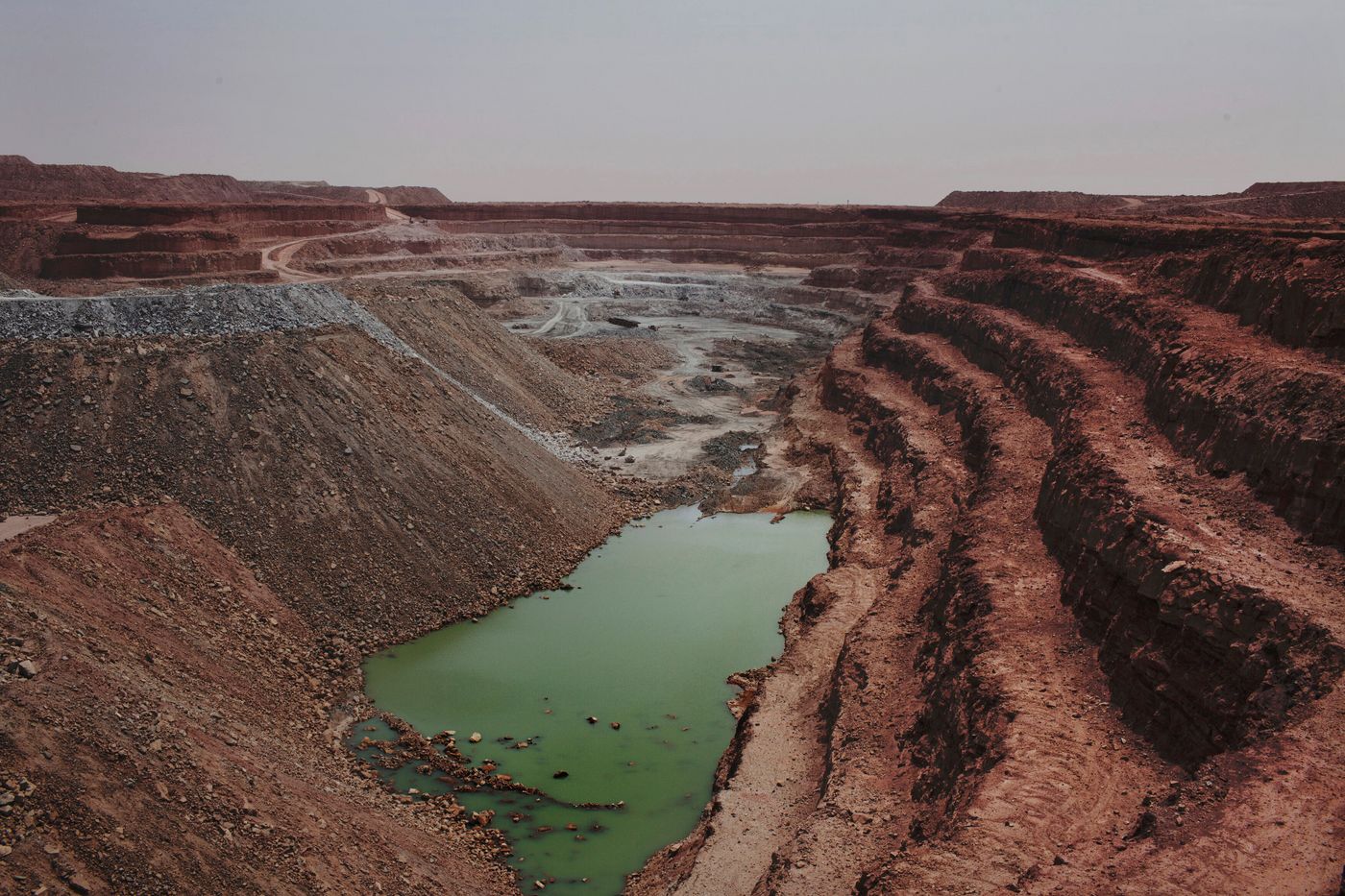
The Tamgak open air uranium mine is seen at an uranium mining facility by Areva's Somair, predecessor of today's Orano SA, in Arlit, Niger, September 25, 2013.
© picture alliance / REUTERS | JOE PENNEY
Resource nationalism denotes efforts by governments to assert greater control over their country’s natural resources, particularly in the extractive industries, that is, mining and hydrocarbons. The stated goal is to obtain a fairer share of revenues for the state, usually at the expense of foreign companies. Resource-rich governments argue that resource nationalism is not only a matter of fairness, but also imperative for national development.
Common and moderate forms of resource nationalism include reforms to regulatory and legislative frameworks to increase taxes and royalties on mining companies, as well as local content requirements stipulating greater local ownership in mining operations, value-adding local processing, and greater use of local labour and services.
Driven by rising prices for certain commodities (e.g. copper, nickel, and gold) as well as fiscal constraints, state intervention in the extractive industries has increased in many African countries in recent years, including Zimbabwe, Namibia, Ghana, and Senegal. Governments there have embraced a variety of measures to bolster state revenues and increase the role and ownership of the state in mining operations and assets. Audits of mining contracts and revisions to regulatory frameworks have also been common, sometimes leading to the renegotiation of contractual terms that had previously – and often disproportionately – benefited foreign mining companies.
But resource nationalism takes many forms. At its most radical, it includes the expropriation and nationalization of assets and companies.
Mali, Burkina Faso, and Niger: Cash-Strapped but Resource-Rich
In power since 2022, 2020, and 2023 respectively, the cash-strapped military regimes in Burkina Faso, Mali, and Niger have joined the growing tide of resource nationalist policies, in Africa as elsewhere. Making a political virtue out of economic necessity, resource nationalism aligns with the regimes’ emphatic insistence on sovereignty and nationalism. Claiming to be taking back control of their countries’ resource wealth therefore became the logical consequence – the counterpart of political sovereignty. Faced with powerful insurgency movements, efforts to tap the mining sector have become necessary to finance escalating security-related expenditure. For example, military budgets in both Burkina Faso and Niger have more than doubled since 2021, now accounting for between 14 per cent (Niger) and 17 per cent of official government expenditure (Burkina Faso, Mali), according to the World Bank.
The need to maximize revenues has become more urgent following the near-total breakdown in relations between the Sahelian juntas and Western donors, and the resulting decline in aid flows. As attempts to mobilize financial support from non-Western partners (China, Turkey, and the Gulf states, among others) were met with uneven and limited success, turning to natural resources was an obvious choice. This incentive was greater still given the surge in gold prices, which have surged in recent years to more than USD 5,000 per ounce, up from USD 1,700 in 2020.
Although Burkina Faso, Mali, and Niger are among the poorest countries in the world, they are richly endowed with natural resources. In 2024, Mali was the world’s 11th-largest gold producer, at 100 tonnes, followed by Burkina Faso, at 94.4 tonnes; in both cases, gold accounted for roughly 85 per cent of export earnings. Mali is also an emerging producer of lithium, thanks to two mining projects operated by Chinese companies in Goualamina and Bougouni. Niger is only a minor gold producer, but it holds some of the world’s largest uranium reserves, which previously accounted for 12 per cent of its export earnings, though production has sharply declined since the 2023 coup. Since 2024, oil has accounted for the largest share of the country’s export earnings (29%), thanks to a new pipeline operated by the China National Petroleum Company (CNPC), built at a cost of more than USD 5 billion. At full capacity, Niger hopes to produce 200,000 barrels per day, most of which will be exported.
Tougher Times for Miners
The juntas in the Sahel have employed both conventional and unconventional methods to maximize economic benefits from the mining sector. At the softer end of the spectrum, they have revamped regulatory frameworks and legislation. For instance, Burkina Faso adopted a new mining code in 2024 that increased the state’s equity stake in new mining projects from 10 to 15 per cent, at no cost to the state. It also eliminated previously granted tax and customs exemptions and introduced broader state oversight. In Mali, the new mining law (2023) increased state and local ownership in mining operations from 20 per cent to as much as 35 per cent (5% for Mali’s private sector and up to 30% for the state), while introducing progressive taxation and royalty systems. Similar measures can be expected in Niger, where reform of the mining code is under way.
At the harder end of the spectrum, nationalization has also been part of the repertoire of military governments. In Burkina Faso, the authorities revoked several mining licences, prompting the Australia-based gold miner Sarama Resources to launch arbitration proceedings against the government. The state also took control of two major gold mines, Boungou and Wahgnion, previously owned by a UK-based company. Although the government paid compensation, the assets were reportedly acquired below market value through the state-run Société de Participation Minière du Burkina (SOPAMIB).
Compared with resource nationalist governments elsewhere, grievances towards the mining sector have sometimes led to remarkably arbitrary actions against companies in the Sahel. The military juntas have employed rough and sometimes “terrifying” methods that some have likened to a “crackdown”. In some cases, though by no means all, these actions have been linked to foreign policy shifts. Against the backdrop of strong “anti-French sentiment”, the junta in Niger nationalized Somaïr, the country’s largest uranium mine, which is operated and majority-owned by the French state-owned company Orano. Amid accusations of “irresponsible, illegal and disloyal behaviour by Orano”, the government also seized 1,000 tonnes of uranium stockpiles at the Somaïr site, with an estimated market value of EUR 250 million. Orano said this violated a ruling by the World Bank-affiliated International Centre for Settlement of Investment Disputes in arbitration proceedings it had brought against the government, to little avail so far. Niger also revoked the mining licence held by the Canadian company GoviEx Uranium Inc. at Madaouela, and nationalized the Samira Hill gold mine in August 2025. Importantly, the Nigerien authorities did not just target Western companies; Niamey was also on a collision course with China’s CNPC over taxes, debt arrears, and salaries, considerably slowing oil production and export.
Even more aggressive tactics were employed by Mali’s authorities. Following the introduction of new mining legislation in 2023, several foreign companies negotiated new operating conditions, with most conceding to retroactive tax payments. Companies that resisted incurred the junta’s wrath, which did not shy away from coercive means. Most notoriously, the chief executive of Australian miner Resolute Mining was detained for two weeks during a visit to Bamako in 2024. Several employees of Toronto-based Barrick Gold were also arrested and an arrest warrant was issued for its CEO. Bamako also seized company stockpiles of gold and restricted exports. The stand-off led to the closure of Barrick’s Loulo-Gounkoto mining complex, which contributes 40 per cent of Mali’s gold output. In November 2025, after two years of legal proceedings, arm-twisting, and arduous negotiations, Barrick and the government settled their dispute, with the former allegedly agreeing to pay USD 430 million to the Malian state. From the point of view of the authorities in Bamako, this was not extortion, but the legitimate recovery of outstanding arrears that a state-commissioned audit had previously identified. Bamako reported recovering a total of USD 1.2 billion from various mining companies between 2023 and 2025.
Revenues Are Rising, but What Comes Next?
In the short term, the resource nationalist measures taken by the juntas in the Sahel have yielded undeniable success. Outstanding arrears, such as those recovered in Mali and Burkina Faso, have been substantial, while revised mining codes are projected to increase annual revenues significantly. The Malian government, for instance, expects an increase in annual mining revenues of 50 per cent.Whether these projections will materialize will depend on global gold prices. Today’s exceptionally high prices help to explain why mining companies have stayed the course so far, despite the increasing hostility and unpredictability of host governments. Current gold prices create exceptional circumstances that may not last, but for now they mean that both sides are locked into an uneasy, but ultimately mutually beneficial, relationship. Moreover, sunk costs suggest that international mining companies will be reluctant to walk away. This is true, for example, of CNPC, given that it has invested billions of US dollars in Niger.
Although mining revenues have temporarily increased, two questions remain: first, how stable the mining sector will be under the new resource nationalist regime; and second, how the additional revenues will be spent. All things considered, difficulties await down the road. If the security environment continues to deteriorate, this may also affect the mining sector. Although extractive activities are often insulated from broader instability, attacks on economic infrastructure, businesses, and foreign personnel have recently become more common in the Sahel, as insurgents specifically target the economic lifeblood of the regimes. Finally, the rough and at times unpredictable behaviour of the military governments vis-à-vis mining companies may also have a chilling effect on businesses and investors in the non-extractive sector.
Larger mining revenues are surely good news for Burkina Faso, Mali, and Niger. The question remains whether greater revenues will create further opportunities for rent-seeking by military and political elites, or to what extent profits will translate into improved security and better public services – a perennial problem already under successive democratic governments. This would require improvements in institutional quality that appear highly unlikely in the current context of civil war, not to mention the narrow policy space available to regimes that struggle to survive. It would also necessitate a minimum of transparency and accountability, for which the exceedingly repressive military regimes in the Sahel have shown little appetite – as illustrated, for example, by opaque arms acquisition contracts and off-budget expenditures.
Dr Denis Tull is a Project Director of Megatrends Afrika and a Senior Associate in the research division Africa and Middle East at the German Institute for International and Security Affairs (SWP).
